
Teams in conflict · 2026
A retreat for an executive team in conflict.
When a leadership team has split into camps, another offsite of slides and breakouts usually hardens the lines. What works is a shared experience hard enough that the team has to rely on each other, then the conversation they have been avoiding, then 30 days of tracking so it holds.
The short answer
- A retreat helps when the conflict is about how the team works together: two camps, turf, distrust after a merger or reorganization, a clash of values or work styles.
- A retreat does not help when the problem is one person’s conduct, a legal or HR matter, or a CEO who will not take part as a member of the team.
- The test: can the whole team finish one sentence together? If we accomplish nothing else on this retreat, we will ____. If they can, a retreat is the right tool.
Signs your team needs this, not another offsite
Conflict on a senior team is rarely loud. It usually looks like this.
- Decisions do not holdAgreed in the meeting, relitigated in the hallway or by email afterward.
- Two campsPeople sit, message and vote with the same allies every time.
- Polite meetingsNobody disagrees in the room, and nothing changes after it.
- The team below feels itMixed priorities, duplicated work, good people starting to leave.
How a retreat for a team in conflict works
- Confidential interviews first. Every leader talks to the facilitator one-to-one before the retreat, so the real issues are known before anyone travels.
- One outcome, named by the team. The whole team answers the one question above. It describes the team, not two people on it.
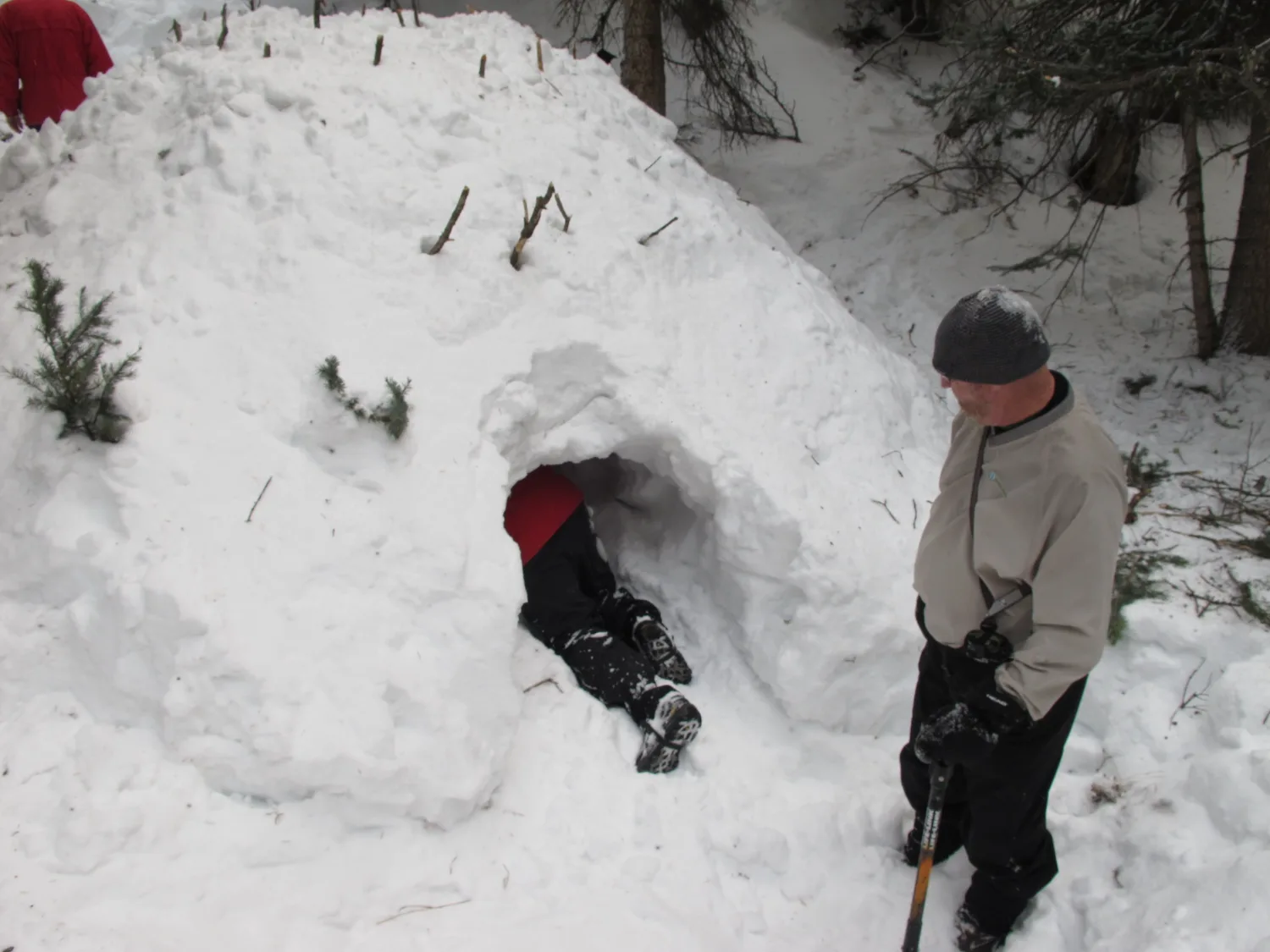
- A shared experience with real stakes. A winter-survival day, an off-road route or a wilderness scenario designed so the camps have to depend on each other. Trust is earned by doing something hard together, not by discussing it.
- The hard conversation, while it is fresh. Facilitated that evening or the next morning, when the experience has lowered the guard and given the team a shared reference point.
- One behavior per leader, tracked for 30 days. A baseline before, a daily check-in after, and a written day-30 report. How it is measured.
What it looked like for two teams in conflict
A team split in two. Seven executives at a biomedical engineering and manufacturing company had divided into two camps over work ethic. A winter-survival scenario in the San Juan Mountains made the two camps depend on each other. At day 30, the tracked behaviors (staying connected, respecting the other camp’s view, discussing work-ethic beliefs without the old conflict) were up 268%. Read the case study.
Five rivals on one team. An online auto retailer had hired five star executives from competing firms who treated the team as a contest. Two days stranded together on Lippincott Pass in Death Valley, then a debrief, produced a 178% gain in teaming behaviors at day 30. Read the case study.
Why a conference room usually makes it worse
Talking about trust in a hotel meeting room asks people to be vulnerable in exactly the setting where they have been defending themselves. Camps re-form at the coffee break. A shared experience changes the order: the team does something hard together first, and the conversation that follows starts from evidence that they can rely on each other.
Formats that fit a team in conflict: winter survival, wilderness expedition and off-road immersion. For a newly combined team, see a retreat for a newly merged leadership team.
Who runs it
Legendary Retreats designs and leads these retreats for leadership teams of 5 to 12. James Carter, the founder and an executive retreat facilitator with 25 years of work inside leadership teams, facilitates every one personally. Design, facilitation, lodging and logistics are included. Published tiers: Focused $35,000 to $50,000, Signature $45,000 to $150,000, Bespoke $75,000 and up, turnkey, airfare usually excluded.
Questions buyers ask
Can a retreat fix a leadership team in conflict?
Yes, when the conflict is about how the team works together rather than one person’s conduct. The retreat needs a shared experience with real stakes, a facilitated conversation while it is fresh, and one behavior per leader tracked for 30 days. Legendary Retreats has published day-30 gains of 268% and 178% for teams that started in conflict.
Should we hire a mediator instead?
If the conflict is between two people, or is a legal or HR matter, a mediator or HR process is the right tool. If the whole team has split into camps or stopped trusting each other, a facilitated experiential retreat works on the team as a system, which mediation does not.
How long should a retreat for a team in conflict be?
Usually three days: an arrival and framing evening, a full day of shared experience followed by the hard conversation, and a final morning to agree one behavior per leader.
What if the CEO is part of the conflict?
Then the CEO has to take part as a member of the team, not as an observer. If the CEO will not, a retreat is the wrong tool and we will say so before anyone books travel.
How do you know it worked?
By measuring it. Each leader commits to one behavior, checks in daily for 30 days, and the team gets a written day-30 report against a baseline recorded before the retreat.
Is your leadership team split?
Tell us what is happening. For Focused and Signature retreats you get a written proposal within 72 hours, and if a retreat is the wrong tool, we will tell you.